Huawei Nova 3i - An Introduction The mainstream smartphone market segment has never been this crowded. Many manufacturers are pushing out affordable and feature-packed smartphones that are giving consumers a good run for their money. It just became a lot more difficult for consumers to make an informed decision on the
Huawei Nova 3i - An Introduction
The mainstream smartphone market segment has never been this crowded. Many manufacturers are pushing out affordable and feature-packed smartphones that are giving consumers a good run for their money. It just became a lot more difficult for consumers to make an informed decision on the right smartphone to purchase!
With the new Nova 3i Smartphone, Huawei tries to make it a straightforward choice for consumers who are seeking for a new smartphone in this segment. Following the launch of the Huawei Nova 3i at AVRY Singapore last week, the Chinese company announced that the new smartphone will be sold at a compelling price of S$398 from the 28th July onwards.
With much support from Huawei, we managed to get our hands on the new Huawei Nova 3i almost 2 weeks before the actual launch. Using the Nova 3i as my primary phone for the past 3 weeks, I should be able to give an accurate review of the phone from my personal experience by looking at things from more of a technical perspective.
What is the Huawei Nova Series all about?
Huawei created the whole Nova series of smartphone for the youths. By listening to feedback on the previous generations of Nova smartphones and learning from their target audience, they managed to refine some key attributes that draw youths towards it. The new Nova 3 series focuses on 3 main aspects - affordability, great camera performance (especially with the front facing camera), and game performance. Moreover, Huawei thinks that smartphones are a reflection of the user, and therefore, the aesthetics of the phone must definitely stand out.
Introducing the Huawei Nova 3i
For the international market, the Huawei Nova 3 series comes in two versions, namely the Nova 3i and Nova 3. The latter, which is a flagship for the Nova series, will not be available in Singapore due to the similarities with other Huawei/Honor products. Let's focus our attention to the Nova 3i in this article.
[caption id="attachment_10866" align="aligncenter" width="1024"] Left: Sim Card + MicroSD Card Slot[/caption]
[caption id="attachment_10867" align="aligncenter" width="1024"] Right: Power and Volume Buttons[/caption]
Specifications
Feature
Specification
Price
S$398
CPU
Kirin 710 Octa-Core
Memory
4GB
Storage
128GB
OS
Android 8.1 + EMUI 8.2
Screen Size
6.3”
Resolution
FHD+, 2340 x 1080
Rear Cam
16MP + 2MP
Front Cam
24MP + 2MP
Battery
3340mAh
Size (mm)
158 x 75.2 x 7.5
Weight
169g
Design
Glass, Gradient Colour
Available in Iris Purple and Black
[caption id="attachment_10869" align="aligncenter" width="1024"] Hybrid SIM Card/MicroSD Card slot[/caption]
The Nova 3i is the first smartphone in the world to feature the Kirin 710 chipset. This is the new chipset that will power all other mainstream smartphones from Huawei, and it will replace the current Kirin 659 chipset. On paper, the Kirin 710 is expected to perform about 2x faster on single threaded applications and 2.26x faster on GPU performance when compared to the Kirin 659. Since raw performance of the chipset is not the focus of the article, we will discuss more on the Kirin 710 in a separate article (coming soon).
Aesthetics
I think most consumers will always look at the external aesthetics design as one of the key evaluation criteria when it comes to choosing their own smartphone. The Huawei Nova 3i definitely stands out, as it is probably one of the prettiest phone one can purchase in this price range.
Firstly, even though the Nova 3i is physically the same size as its predecessor (Nova 2i), it managed to contain a larger 6.3inch display (as compared to 5.5inch). By pushing the limits of a higher screen to body ratio with better design and manufacturing process, Huawei managed reduce the bezels width on both the top and bottom of the phone. This design updates the Nova series to be comparable with many other premium smartphones in the market.
Surprisingly, the Huawei Nova 3i also features a unique shiny design that is only available on their top-of-the-line P20 series. Instead of a typical single colour, the Nova 3i's back cover will have a gradient colour design. The top of the phone will first start off with blue, but will then gradually transit into dark purple at the bottom. This "gradient colour" design is becoming a new trend for smartphones, and the Nova 3i will be riding the wave to put this piece of art into the hands of the mass market.
It's no easy feat for such a design. Huawei explained to us that they used a glass of varying thickness that sits on top of a nano metallic sheet with different patterns/tattoos to achieve the shiny gradient colour effect. Additionally, the glass still seamlessly connects to the metallic sides of the phone.
We can really imagine the amount of design and engineering effort they have placed on the Nova 3i just to achieve a specific aesthetic feature. It's probably the continuous pursuit of perfection that sets Huawei apart from any other.
Camera Performance
Rear Camera
The core of Huawei's camera engine is the Artificial Intelligence engine that helps the phone to recognize scenarios and apply different colour and profile settings to enhance the image quality. The Huawei Nova 3i's AI system is currently based on more than 100 million images that can recongize over 500 scenarios in 22 categories. You don't even need to be a professional photographer to shoot pretty photos!
[caption id="attachment_10832" align="aligncenter" width="1024"] AI Photography: Detects that subject is under "Food" Category[/caption]
[caption id="attachment_10833" align="aligncenter" width="1024"] AI Photography: Detects that subject is under "Night" Category[/caption]
Even though the Nova 3i is able to understand the different scenarios, we are unsure if the photos taken will actually make a difference. Here are some sample photos taken with the Huawei Nova 3i.
[caption id="attachment_10830" align="aligncenter" width="1024"] Auto Settings: Without AI[/caption]
[caption id="attachment_10831" align="aligncenter" width="1024"] HDR Settings[/caption]
[caption id="attachment_10829" align="aligncenter" width="1024"] Auto Settings with AI on[/caption]
The basic camera system is considered decent, even without the AI capabilities. In the first photo, we had the phone set to fully automatic, and the phone was able to capture the scene quite nicely, showing details on the buildings. The HDR feature slightly improved the quality, as the main DBS building looked brighter than the first.
With the AI system turned on, the images produced was out of this world. Don't get me wrong, as this could go both ways. As seen, the photo taken with AI is extremely different from the original. The blue sky became more saturated which is more noticeable with the reflections on the DBS building. Overall, the photo captured with AI turned on looked to be a more vibrant composition, but it could have also overdone it. The photo looked somewhat unnatural, as the colours seemed to be overly saturated.
[caption id="attachment_10827" align="aligncenter" width="1024"] Night Photo: Without AI[/caption]
[caption id="attachment_10828" align="aligncenter" width="1024"] Night Photo: With AI[/caption]
The AI engine did a much better job when it came to photos taken in low light scenarios. Comparing the photos taken with and without AI, the one taken with AI showed more details. The details of the upper portions of the building which are barely visible on the original photo could actually be seen on the photo taken with AI mode on.
Generally, the AI mode does improve picture quality. The rule of thumb is that you should always take photos with AI mode on. This is because the AI post-processes tje photos after the actual capture of the photo. This means that you can still revert back to the original photo taken from the Nova 3i even with AI mode turned on.
[caption id="attachment_10836" align="aligncenter" width="1024"] Food Photo: HDR Mode[/caption]
[caption id="attachment_10835" align="aligncenter" width="1024"] Food Photo: AI Mode[/caption]
If you would not want your images to be excessively saturated, perhaps the HDR mode would be good enough. I have to agree that the colours of the char siu in the photo with AI Mode turned out to look a lot more appetizing, but I do prefer the colour accuracy of the bowl and utensils from the original photo.
[caption id="attachment_10837" align="alignleft" width="319"] Auto Mode[/caption]
[caption id="attachment_10838" align="alignleft" width="317"] Portrait Mode[/caption]
Huawei smartphones are known for their pretty portrait shots due to the capabilities of the software-enabled bokeh effect. With the 2nd 2MP camera, the depth of the object can be determined from the background, allowing the bokeh effect to be represented more accurately. No complains on the portrait mode function on the Nova 3i.
Front Camera
Since the Nova series is targeted towards youngsters, Huawei also put in extra effort to the front camera system on the Nova 3i. In fact, the Nova 3i is the first ever smartphone to have AI capabilities enabled on the front camera system. Similar to the rear camera, the front camera system also comes with a 2MP and 24MP rear camera. The 2MP mainly captures information about the depth of field, while the 24MP camera captures image data.
The front camera system can also identify scenarios like the rear camera. For example, it was able to detect that I was taking selfie photos in a room, and edited the photo to better suit the environment. Huawei also mentioned that they have a beautification algorithm that tries to understand and recognize the user based on the gender, age and skin tone. The effects on a 25-year-old male (who actually looks like someone in the mid-30s) is as follows.
I must admit, I do not have that good of a complexion. Well... this actually allowed me to better test the effectiveness of the beautification mode!
[caption id="attachment_10839" align="alignleft" width="316"] Beautification Level: 0[/caption]
[caption id="attachment_10841" align="alignleft" width="317"] Beautification Level: 5[/caption]
[caption id="attachment_10842" align="aligncenter" width="336"] Beautification Level: 10[/caption]
The Beautification mode works pretty well, but just make sure that you adjust the beautification level to a level which you are comfortable with. It was able to smoothen my face and gave me prettier eyes. Level 5 was considered just right for me.
[caption id="attachment_10843" align="aligncenter" width="257"] Portrait Mode (Front Camera)[/caption]
[caption id="attachment_10844" align="aligncenter" width="256"] Normal Mode (Front Camera)[/caption]
It is also the first time that Huawei has brought the portrait mode to the front camera system. As seen on this image, the portrait photo taken from the front camera can also have a bokeh effect. However, we did notice that the quality was not as good as the one taken from the rear camera.
Augmented Reality effects with camera
Let's face it... (literally?) Following the footsteps of Apple, Huawei also created their own version of Animoji called Qmoji. With Qmoji, users can record facial expressions and generate a personalized 3D Qmoji pack in GIF or video format.
We did a comparison between Huawei's 3D Qmoji and Apple's Animoji, and we felt that Apple's implementation was generally superior over Huawei's. Animoji was able to better replicate facial expressions and is more responsive.
Nonetheless, the Huawei 3D Qmoji feature did bring an element of fun to the table and we enjoyed it!
Gaming Performance
The Huawei Nova 3i comes with GPU Turbo feature to enhance the overall gaming experience on the smartphone. This is done by optimizing both hardware and software on the phone to better adapt to the demanding needs of games. With GPU Turbo, the Nova 3i is said to perform 60% better in terms of processing efficiency. Moreover, it will also enable games to run at a better framerate while reducing power consumption by 30%. For more information about GPU Turbo, you can visit our quick overview of the technology here.
[caption id="attachment_10848" align="alignleft" width="278"] Game Suite[/caption]
[caption id="attachment_10847" align="alignleft" width="277"] Game Acceleration Mode[/caption]
[caption id="attachment_10846" align="aligncenter" width="279"] Uninterrupted Gaming Mode[/caption]
To enhance the experience for gamers, Huawei developed the Game Suite app that simplifies management of all the games installed on the phone. With Game Suite, gamers can give priority to their gaming experience by preventing power saving modes and provide the full hardware capabilities to the specific game with "Game Acceleration" mode. Users can also use "Unintended Gaming" mode to prevent any notifications or toast messages that could disrupt their games. This feature will be especially useful for users who treat their games seriously.
We tried Asphalt Nitro on the Nova 3i and determined the phone to be capable of handling the game well.
Affordability
Price is one of the biggest factors to consider when choosing a new smartphone. Let's compare the Huawei Nova 3i to some of the latest smartphones in the same market segment today.
We know that the Huawei Nova 3i costs S$398, placing it right at the forefront of the affordability metrics. It is truly a smartphone that stretches your dollar with all the features and capabilities that comes together with it.
What could be improved?
Most of the quirks of the Huawei Nova 3i comes directly from the choice to adopt the Kirin 710 as the base chipset to power the smartphone. In most cases, the Kirin 710 chipset seems to quite a letdown for the Nova 3i, causing it not to be the obvious choice for users.
The Kirin 710's design mandates that only MicroUSB ports are used, instead of the more popular USB Type-C Ports. Therefore, instead of USB Type-C which is reversible in design, users will have to fiddle with their MicroUSB cables and find out the right position to insert their charging cable.
The Kirin 710 also lacks 802.11ac WiFi standard. Moreover, it only supports the 2.4GHz on the 802.11n standard. Therefore, users will not be able to connect their smartphones to the 5GHz WiFi channels. Based on our tests, the lack of 5GHz WiFi which supports higher bandwidth throughput will have a huge impact on video streaming. Based on a 720p video stream, there was constant buffering on the Nova 3i. However, when switching to a 5GHz WiFi connection on the Huawei Mate 10 Pro, the video streaming was seamless. Based on a simple poll on Facebook which gathered 61 votes, 69% of the respondents also felt that the support for 5GHz WiFi connections is fundamental a smartphone today.
While there is nothing much we can expect from the Huawei Nova 3i at the price point it is at, I do hope that Huawei can simply get their basics right. In my humble opinion, it should almost be a basic requirement for smartphones of today to come with a USB Type C connection and 5GHz WiFi support.
Conclusion
Nothing comes near to the value that the Huawei Nova 3i provides at the price point of S$398. Until a worthy contender arrives into the market to prove us wrong, the Huawei Nova 3i is the most logical choice for someone looking to purchase a new smartphone at this price point. It deserves our Best Value Award.
Availability
The Huawei Nova 3i will be available in both Iris Purple and Black at the recommended retail price of S$398 and will be making its public debut on 28 July 2018 at Waterway Point Shopping Mall, East Wing Atrium, Basement 2. From 11am to 9pm, customers will receive a Casio G-SHOCK Analog-Digital Watch (worth $199) with every purchase of the nova 3i, while stocks last.
As part of the debut on 28 July, visitors will also be treated to a day of entertainment with celebrity appearances by local sweethearts Joanna Dong and Boon Hui Lu.
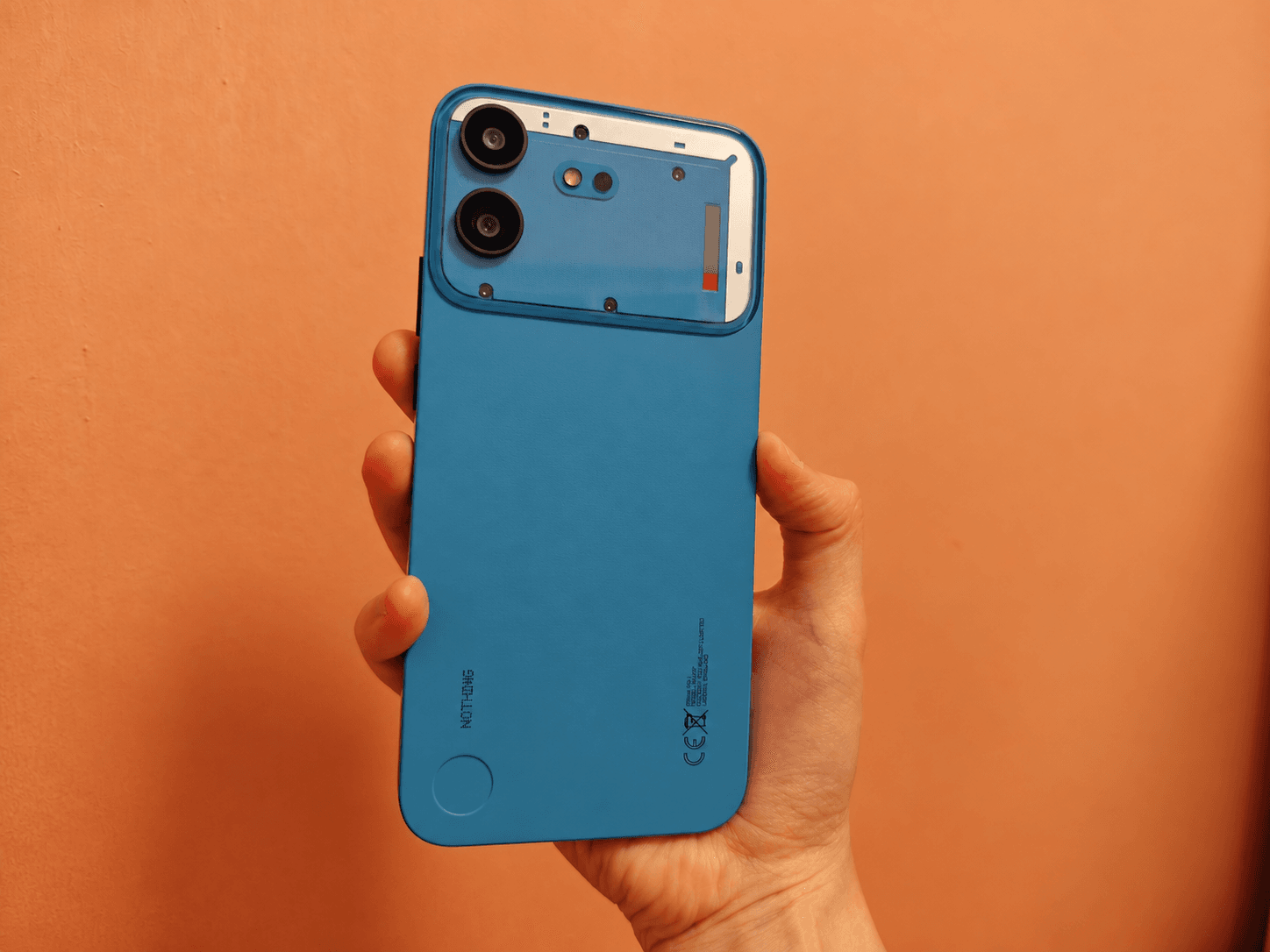
The Nothing Phone (4b) brings the brand’s distinctive design and clean software experience to a more affordable price point. After spending time with the Blue 8GB/128GB model, I fo...
There's a certain kind of storage device that lives at the bottom of a backpack, gets plugged into three different laptops before lunch, and never asks for a cable, an app, or a se...
I’ve been using the Redmi Note 15 Pro as my daily phone for a bit, and here’s the vibe: it’s built like it’s ready for a bad day (or a clumsy owner), it lasts forever on a charge,...


 Huawei created the whole Nova series of smartphone for the youths. By listening to feedback on the previous generations of Nova smartphones and learning from their target audience, they managed to refine some key attributes that draw youths towards it. The new Nova 3 series focuses on 3 main aspects - affordability, great camera performance (especially with the front facing camera), and game performance. Moreover, Huawei thinks that smartphones are a reflection of the user, and therefore, the aesthetics of the phone must definitely stand out.
 Left: Sim Card + MicroSD Card Slot[/caption]
[caption id="attachment_10867" align="aligncenter" width="1024"]
Left: Sim Card + MicroSD Card Slot[/caption]
[caption id="attachment_10867" align="aligncenter" width="1024"] Right: Power and Volume Buttons[/caption]
Specifications
Right: Power and Volume Buttons[/caption]
Specifications
 Hybrid SIM Card/MicroSD Card slot[/caption]
The Nova 3i is the first smartphone in the world to feature the Kirin 710 chipset. This is the new chipset that will power all other mainstream smartphones from Huawei, and it will replace the current Kirin 659 chipset. On paper, the Kirin 710 is expected to perform about 2x faster on single threaded applications and 2.26x faster on GPU performance when compared to the Kirin 659. Since raw performance of the chipset is not the focus of the article, we will discuss more on the Kirin 710 in a separate article (coming soon).
Hybrid SIM Card/MicroSD Card slot[/caption]
The Nova 3i is the first smartphone in the world to feature the Kirin 710 chipset. This is the new chipset that will power all other mainstream smartphones from Huawei, and it will replace the current Kirin 659 chipset. On paper, the Kirin 710 is expected to perform about 2x faster on single threaded applications and 2.26x faster on GPU performance when compared to the Kirin 659. Since raw performance of the chipset is not the focus of the article, we will discuss more on the Kirin 710 in a separate article (coming soon).
 I think most consumers will always look at the external aesthetics design as one of the key evaluation criteria when it comes to choosing their own smartphone. The Huawei Nova 3i definitely stands out, as it is probably one of the prettiest phone one can purchase in this price range.
Firstly, even though the Nova 3i is physically the same size as its predecessor (Nova 2i), it managed to contain a larger 6.3inch display (as compared to 5.5inch). By pushing the limits of a higher screen to body ratio with better design and manufacturing process, Huawei managed reduce the bezels width on both the top and bottom of the phone. This design updates the Nova series to be comparable with many other premium smartphones in the market.
I think most consumers will always look at the external aesthetics design as one of the key evaluation criteria when it comes to choosing their own smartphone. The Huawei Nova 3i definitely stands out, as it is probably one of the prettiest phone one can purchase in this price range.
Firstly, even though the Nova 3i is physically the same size as its predecessor (Nova 2i), it managed to contain a larger 6.3inch display (as compared to 5.5inch). By pushing the limits of a higher screen to body ratio with better design and manufacturing process, Huawei managed reduce the bezels width on both the top and bottom of the phone. This design updates the Nova series to be comparable with many other premium smartphones in the market.
 Surprisingly, the Huawei Nova 3i also features a unique shiny design that is only available on their top-of-the-line P20 series. Instead of a typical single colour, the Nova 3i's back cover will have a gradient colour design. The top of the phone will first start off with blue, but will then gradually transit into dark purple at the bottom. This "gradient colour" design is becoming a new trend for smartphones, and the Nova 3i will be riding the wave to put this piece of art into the hands of the mass market.
It's no easy feat for such a design. Huawei explained to us that they used a glass of varying thickness that sits on top of a nano metallic sheet with different patterns/tattoos to achieve the shiny gradient colour effect. Additionally, the glass still seamlessly connects to the metallic sides of the phone.
We can really imagine the amount of design and engineering effort they have placed on the Nova 3i just to achieve a specific aesthetic feature. It's probably the continuous pursuit of perfection that sets Huawei apart from any other.
Surprisingly, the Huawei Nova 3i also features a unique shiny design that is only available on their top-of-the-line P20 series. Instead of a typical single colour, the Nova 3i's back cover will have a gradient colour design. The top of the phone will first start off with blue, but will then gradually transit into dark purple at the bottom. This "gradient colour" design is becoming a new trend for smartphones, and the Nova 3i will be riding the wave to put this piece of art into the hands of the mass market.
It's no easy feat for such a design. Huawei explained to us that they used a glass of varying thickness that sits on top of a nano metallic sheet with different patterns/tattoos to achieve the shiny gradient colour effect. Additionally, the glass still seamlessly connects to the metallic sides of the phone.
We can really imagine the amount of design and engineering effort they have placed on the Nova 3i just to achieve a specific aesthetic feature. It's probably the continuous pursuit of perfection that sets Huawei apart from any other.
 The core of Huawei's camera engine is the Artificial Intelligence engine that helps the phone to recognize scenarios and apply different colour and profile settings to enhance the image quality. The Huawei Nova 3i's AI system is currently based on more than 100 million images that can recongize over 500 scenarios in 22 categories. You don't even need to be a professional photographer to shoot pretty photos!
[caption id="attachment_10832" align="aligncenter" width="1024"]
The core of Huawei's camera engine is the Artificial Intelligence engine that helps the phone to recognize scenarios and apply different colour and profile settings to enhance the image quality. The Huawei Nova 3i's AI system is currently based on more than 100 million images that can recongize over 500 scenarios in 22 categories. You don't even need to be a professional photographer to shoot pretty photos!
[caption id="attachment_10832" align="aligncenter" width="1024"] AI Photography: Detects that subject is under "Food" Category[/caption]
[caption id="attachment_10833" align="aligncenter" width="1024"]
AI Photography: Detects that subject is under "Food" Category[/caption]
[caption id="attachment_10833" align="aligncenter" width="1024"] AI Photography: Detects that subject is under "Night" Category[/caption]
Even though the Nova 3i is able to understand the different scenarios, we are unsure if the photos taken will actually make a difference. Here are some sample photos taken with the Huawei Nova 3i.
[caption id="attachment_10830" align="aligncenter" width="1024"]
AI Photography: Detects that subject is under "Night" Category[/caption]
Even though the Nova 3i is able to understand the different scenarios, we are unsure if the photos taken will actually make a difference. Here are some sample photos taken with the Huawei Nova 3i.
[caption id="attachment_10830" align="aligncenter" width="1024"] Auto Settings: Without AI[/caption]
[caption id="attachment_10831" align="aligncenter" width="1024"]
Auto Settings: Without AI[/caption]
[caption id="attachment_10831" align="aligncenter" width="1024"] HDR Settings[/caption]
[caption id="attachment_10829" align="aligncenter" width="1024"]
HDR Settings[/caption]
[caption id="attachment_10829" align="aligncenter" width="1024"] Auto Settings with AI on[/caption]
The basic camera system is considered decent, even without the AI capabilities. In the first photo, we had the phone set to fully automatic, and the phone was able to capture the scene quite nicely, showing details on the buildings. The HDR feature slightly improved the quality, as the main DBS building looked brighter than the first.
With the AI system turned on, the images produced was out of this world. Don't get me wrong, as this could go both ways. As seen, the photo taken with AI is extremely different from the original. The blue sky became more saturated which is more noticeable with the reflections on the DBS building. Overall, the photo captured with AI turned on looked to be a more vibrant composition, but it could have also overdone it. The photo looked somewhat unnatural, as the colours seemed to be overly saturated.
[caption id="attachment_10827" align="aligncenter" width="1024"]
Auto Settings with AI on[/caption]
The basic camera system is considered decent, even without the AI capabilities. In the first photo, we had the phone set to fully automatic, and the phone was able to capture the scene quite nicely, showing details on the buildings. The HDR feature slightly improved the quality, as the main DBS building looked brighter than the first.
With the AI system turned on, the images produced was out of this world. Don't get me wrong, as this could go both ways. As seen, the photo taken with AI is extremely different from the original. The blue sky became more saturated which is more noticeable with the reflections on the DBS building. Overall, the photo captured with AI turned on looked to be a more vibrant composition, but it could have also overdone it. The photo looked somewhat unnatural, as the colours seemed to be overly saturated.
[caption id="attachment_10827" align="aligncenter" width="1024"] Night Photo: Without AI[/caption]
[caption id="attachment_10828" align="aligncenter" width="1024"]
Night Photo: Without AI[/caption]
[caption id="attachment_10828" align="aligncenter" width="1024"] Night Photo: With AI[/caption]
The AI engine did a much better job when it came to photos taken in low light scenarios. Comparing the photos taken with and without AI, the one taken with AI showed more details. The details of the upper portions of the building which are barely visible on the original photo could actually be seen on the photo taken with AI mode on.
Generally, the AI mode does improve picture quality. The rule of thumb is that you should always take photos with AI mode on. This is because the AI post-processes tje photos after the actual capture of the photo. This means that you can still revert back to the original photo taken from the Nova 3i even with AI mode turned on.
[caption id="attachment_10836" align="aligncenter" width="1024"]
Night Photo: With AI[/caption]
The AI engine did a much better job when it came to photos taken in low light scenarios. Comparing the photos taken with and without AI, the one taken with AI showed more details. The details of the upper portions of the building which are barely visible on the original photo could actually be seen on the photo taken with AI mode on.
Generally, the AI mode does improve picture quality. The rule of thumb is that you should always take photos with AI mode on. This is because the AI post-processes tje photos after the actual capture of the photo. This means that you can still revert back to the original photo taken from the Nova 3i even with AI mode turned on.
[caption id="attachment_10836" align="aligncenter" width="1024"] Food Photo: HDR Mode[/caption]
[caption id="attachment_10835" align="aligncenter" width="1024"]
Food Photo: HDR Mode[/caption]
[caption id="attachment_10835" align="aligncenter" width="1024"] Food Photo: AI Mode[/caption]
If you would not want your images to be excessively saturated, perhaps the HDR mode would be good enough. I have to agree that the colours of the char siu in the photo with AI Mode turned out to look a lot more appetizing, but I do prefer the colour accuracy of the bowl and utensils from the original photo.
[caption id="attachment_10837" align="alignleft" width="319"]
Food Photo: AI Mode[/caption]
If you would not want your images to be excessively saturated, perhaps the HDR mode would be good enough. I have to agree that the colours of the char siu in the photo with AI Mode turned out to look a lot more appetizing, but I do prefer the colour accuracy of the bowl and utensils from the original photo.
[caption id="attachment_10837" align="alignleft" width="319"] Auto Mode[/caption]
[caption id="attachment_10838" align="alignleft" width="317"]
Auto Mode[/caption]
[caption id="attachment_10838" align="alignleft" width="317"] Portrait Mode[/caption]
Huawei smartphones are known for their pretty portrait shots due to the capabilities of the software-enabled bokeh effect. With the 2nd 2MP camera, the depth of the object can be determined from the background, allowing the bokeh effect to be represented more accurately. No complains on the portrait mode function on the Nova 3i.
Portrait Mode[/caption]
Huawei smartphones are known for their pretty portrait shots due to the capabilities of the software-enabled bokeh effect. With the 2nd 2MP camera, the depth of the object can be determined from the background, allowing the bokeh effect to be represented more accurately. No complains on the portrait mode function on the Nova 3i.
 Since the Nova series is targeted towards youngsters, Huawei also put in extra effort to the front camera system on the Nova 3i. In fact, the Nova 3i is the first ever smartphone to have AI capabilities enabled on the front camera system. Similar to the rear camera, the front camera system also comes with a 2MP and 24MP rear camera. The 2MP mainly captures information about the depth of field, while the 24MP camera captures image data.
The front camera system can also identify scenarios like the rear camera. For example, it was able to detect that I was taking selfie photos in a room, and edited the photo to better suit the environment. Huawei also mentioned that they have a beautification algorithm that tries to understand and recognize the user based on the gender, age and skin tone. The effects on a 25-year-old male (who actually looks like someone in the mid-30s) is as follows.
I must admit, I do not have that good of a complexion. Well... this actually allowed me to better test the effectiveness of the beautification mode!
[caption id="attachment_10839" align="alignleft" width="316"]
Since the Nova series is targeted towards youngsters, Huawei also put in extra effort to the front camera system on the Nova 3i. In fact, the Nova 3i is the first ever smartphone to have AI capabilities enabled on the front camera system. Similar to the rear camera, the front camera system also comes with a 2MP and 24MP rear camera. The 2MP mainly captures information about the depth of field, while the 24MP camera captures image data.
The front camera system can also identify scenarios like the rear camera. For example, it was able to detect that I was taking selfie photos in a room, and edited the photo to better suit the environment. Huawei also mentioned that they have a beautification algorithm that tries to understand and recognize the user based on the gender, age and skin tone. The effects on a 25-year-old male (who actually looks like someone in the mid-30s) is as follows.
I must admit, I do not have that good of a complexion. Well... this actually allowed me to better test the effectiveness of the beautification mode!
[caption id="attachment_10839" align="alignleft" width="316"] Beautification Level: 0[/caption]
[caption id="attachment_10841" align="alignleft" width="317"]
Beautification Level: 0[/caption]
[caption id="attachment_10841" align="alignleft" width="317"] Beautification Level: 5[/caption]
[caption id="attachment_10842" align="aligncenter" width="336"]
Beautification Level: 5[/caption]
[caption id="attachment_10842" align="aligncenter" width="336"] Beautification Level: 10[/caption]
The Beautification mode works pretty well, but just make sure that you adjust the beautification level to a level which you are comfortable with. It was able to smoothen my face and gave me prettier eyes. Level 5 was considered just right for me.
[caption id="attachment_10843" align="aligncenter" width="257"]
Beautification Level: 10[/caption]
The Beautification mode works pretty well, but just make sure that you adjust the beautification level to a level which you are comfortable with. It was able to smoothen my face and gave me prettier eyes. Level 5 was considered just right for me.
[caption id="attachment_10843" align="aligncenter" width="257"] Portrait Mode (Front Camera)[/caption]
[caption id="attachment_10844" align="aligncenter" width="256"]
Portrait Mode (Front Camera)[/caption]
[caption id="attachment_10844" align="aligncenter" width="256"] Normal Mode (Front Camera)[/caption]
It is also the first time that Huawei has brought the portrait mode to the front camera system. As seen on this image, the portrait photo taken from the front camera can also have a bokeh effect. However, we did notice that the quality was not as good as the one taken from the rear camera.
Normal Mode (Front Camera)[/caption]
It is also the first time that Huawei has brought the portrait mode to the front camera system. As seen on this image, the portrait photo taken from the front camera can also have a bokeh effect. However, we did notice that the quality was not as good as the one taken from the rear camera.
 Game Suite[/caption]
[caption id="attachment_10847" align="alignleft" width="277"]
Game Suite[/caption]
[caption id="attachment_10847" align="alignleft" width="277"] Game Acceleration Mode[/caption]
[caption id="attachment_10846" align="aligncenter" width="279"]
Game Acceleration Mode[/caption]
[caption id="attachment_10846" align="aligncenter" width="279"] Uninterrupted Gaming Mode[/caption]
To enhance the experience for gamers, Huawei developed the Game Suite app that simplifies management of all the games installed on the phone. With Game Suite, gamers can give priority to their gaming experience by preventing power saving modes and provide the full hardware capabilities to the specific game with "Game Acceleration" mode. Users can also use "Unintended Gaming" mode to prevent any notifications or toast messages that could disrupt their games. This feature will be especially useful for users who treat their games seriously.
We tried Asphalt Nitro on the Nova 3i and determined the phone to be capable of handling the game well.
Uninterrupted Gaming Mode[/caption]
To enhance the experience for gamers, Huawei developed the Game Suite app that simplifies management of all the games installed on the phone. With Game Suite, gamers can give priority to their gaming experience by preventing power saving modes and provide the full hardware capabilities to the specific game with "Game Acceleration" mode. Users can also use "Unintended Gaming" mode to prevent any notifications or toast messages that could disrupt their games. This feature will be especially useful for users who treat their games seriously.
We tried Asphalt Nitro on the Nova 3i and determined the phone to be capable of handling the game well.
 We know that the Huawei Nova 3i costs S$398, placing it right at the forefront of the affordability metrics. It is truly a smartphone that stretches your dollar with all the features and capabilities that comes together with it.
 While there is nothing much we can expect from the Huawei Nova 3i at the price point it is at, I do hope that Huawei can simply get their basics right. In my humble opinion, it should almost be a basic requirement for smartphones of today to come with a USB Type C connection and 5GHz WiFi support.
 Nothing comes near to the value that the Huawei Nova 3i provides at the price point of S$398. Until a worthy contender arrives into the market to prove us wrong, the Huawei Nova 3i is the most logical choice for someone looking to purchase a new smartphone at this price point. It deserves our Best Value Award.