AMD Ryzen 7 8700G and Ryzen 5 8600G Review - The fastest APU you can get
Accelerated Processing Units, or APUs for short, has been an ambition of AMD since the early days when heterogenous computing was first introduced. Believing that by introducing both CPU and GPU compute capabilities onto a single desktop processor, mainstream users will be able to enjoy decent computing experiences reg
Accelerated Processing Units, or APUs for short, has been an ambition of AMD since the early days when heterogenous computing was first introduced. Believing that by introducing both CPU and GPU compute capabilities onto a single desktop processor, mainstream users will be able to enjoy decent computing experiences regardless of the types of usage. Thus, AMD has spent many years perfecting the trade. While we have seen them making strides in recent years, especially since the introduction of the Zen and RDNA strategy, the best has yet to come.
AMD Ryzen 8000G Series Processors
Today, AMD has just released their latest Ryzen 8000G Series Processors, which showcases their latest technologies into a single desktop processor. With the latest "Zen 4" microarchitecture, AMD has improved its design which allowed improved IPC (instructions per clock) and higher core frequencies. Furthermore, it also features the AMD Radeon 700M graphics compute units, which leverages on the RDNA 3 graphics technology, to provide improved graphics compute and gaming capabilities. It even features dedicated AI Engine for accelerated AI inference compute capabilities. What's interesting is that AMD has migrated the Ryzen 8000G series processors' Zen 4 CCDs from 5nm node to the 4nm node, promising even more efficiency.
Certainly, the AMD Ryzen 8000G Series sits at the top of consumer desktop heterogenous computing. With the release, AMD has introduced 4 new products as part of the series.
AMD Ryzen 7 8700G
AMD Ryzen 5 8600G
AMD Ryzen 5 8500G
AMD Ryzen 3 8300G
Boost/Base Frequency
5.1/4.2 GHz
5.0/4.3GHz
5.0/3.5GHz
4.9/3.4 GHz
Cores/Threads
8/16
6/12
6/12
4/8
GPU Model / CUs/ Max Boost
Radeon 780M
12CUs
2.9GHz
Radeon 760M
8CUs
2.8GHz
Radeon 740M
4CUs
2.8GHz
Radeon 740M
4CUs
2.6GHz
Ryzen AI NPU
XDNA @ 1.6GHz
XDNA @ 1.6GHz
N/A
N/A
Total Cache (L2+L3)
24MB
22MB
22MB
12MB
TDP
65W
65W
65W
65W
Process Microarchitecture
4nm Zen 4
4nm Zen 4
4nm 2 x Zen4, 4 x Zen4c
4nm 1 x Zen4, 3 x Zen4c
Zen4c Max/Base Clocks
NA
NA
3.7GHz / 3.2GHz
3.6GHz/ 3.2GHz
Boxed Cooler Included
AMD Wraith Spire
AMD Wraith Stealth
AMD Wraith Stealth
N/A
PCIe Gen/ Total Lanes/ Graphics Lanes
Gen 4
20/8
Gen 4
20/8
Gen 4
14/4
Gen 4
14/4
SEP
329USD
229USD
176USD
N/A
We've got our hands on the AMD Ryzen 7 8700G with Radeon 780M and Ryzen 5 8600G with Radeon 760M. It will be exciting to see how these processors perform in our compute and gaming tests. Certainly, we will want to find out if these new processors will be good enough for most of our usage.
All benchmark tests are completed at their default settings. Games are set to Low preset on 1080p resolution, when the settings are available.
Performance Results
Power Consumption and Temperatures
The power consumption and temperature tests were done with Cinebench R23 benchmark. The idle records where taken when a restart of the system was completed and system temperature and power consumption stabilized.
The above load power consumptions and temperatures were reached when the Cinebench R23 benchmark was executed. However, what's not listed is that the AMD Ryzen 8 8700G, under prolonged Cinebench R23 benchmark, had limited is performance to sustain both power and temperatures, even though it was not recorded as being throttled as it is still running above its base clock. The temperature on load was then stabilized at 70 degree celsius.
Conclusion
It's interesting to see how much performance the AMD Ryzen 8000G series can produce now. Compared to the past, where many trade-offs have to be made to incorporate both the CPU and GPU components within a single CPU, the AMD Ryzen 8000G series pushes the limits and shows what it is truly capable of.
In terms of daily compute and productivity tasks, the AMD Ryzen 7 8700G and Ryzen 5 8600G both performed very well. It is more than capable of dealing of your day to day compute requirements, be it for work or entertainment. When it comes to games, with the graphics demanding titles which we have tested both products with, we still see that the APU still has its limitation. It will run games which are less graphics intensive, but it's still far to be a decent offering for AAA titles. Thankfully, you still can upgrade the system with a dedicated graphics card if required in the future.
What's interesting to note is how software implementations, particularly the AMD FidelityFX features can enhance gameplay experiences. It's like a free upgrade to the PC. In our tests, with FidelityFX FSR turned on, despite our settings set to low, the graphics doesn't look as bad as we would expect. Moreover, with FidelityFX FSR 3 Frame Generation, we did get a significant boost to FPS, resulting in a much smoother gameplay experience.
In conclusion, we can see how the AMD Ryzen 8000G series is starting to bridge the gap between CPU and GPU performance on a APU product. If you would to need a system for less graphics demanding games, or simply just for work, both the Ryzen 7 8700G and Ryzen 5 8600G are excellent choices. However, if what you're looking out for is to play AAA titles, then you'd be better off pairing your system with a dedicated GPU. Regardless, we do see how AMD is introducing improvements in both hardware and software to bring that expected experience to a single APU product.
That keeps us excited for the next generation APU offering from AMD.
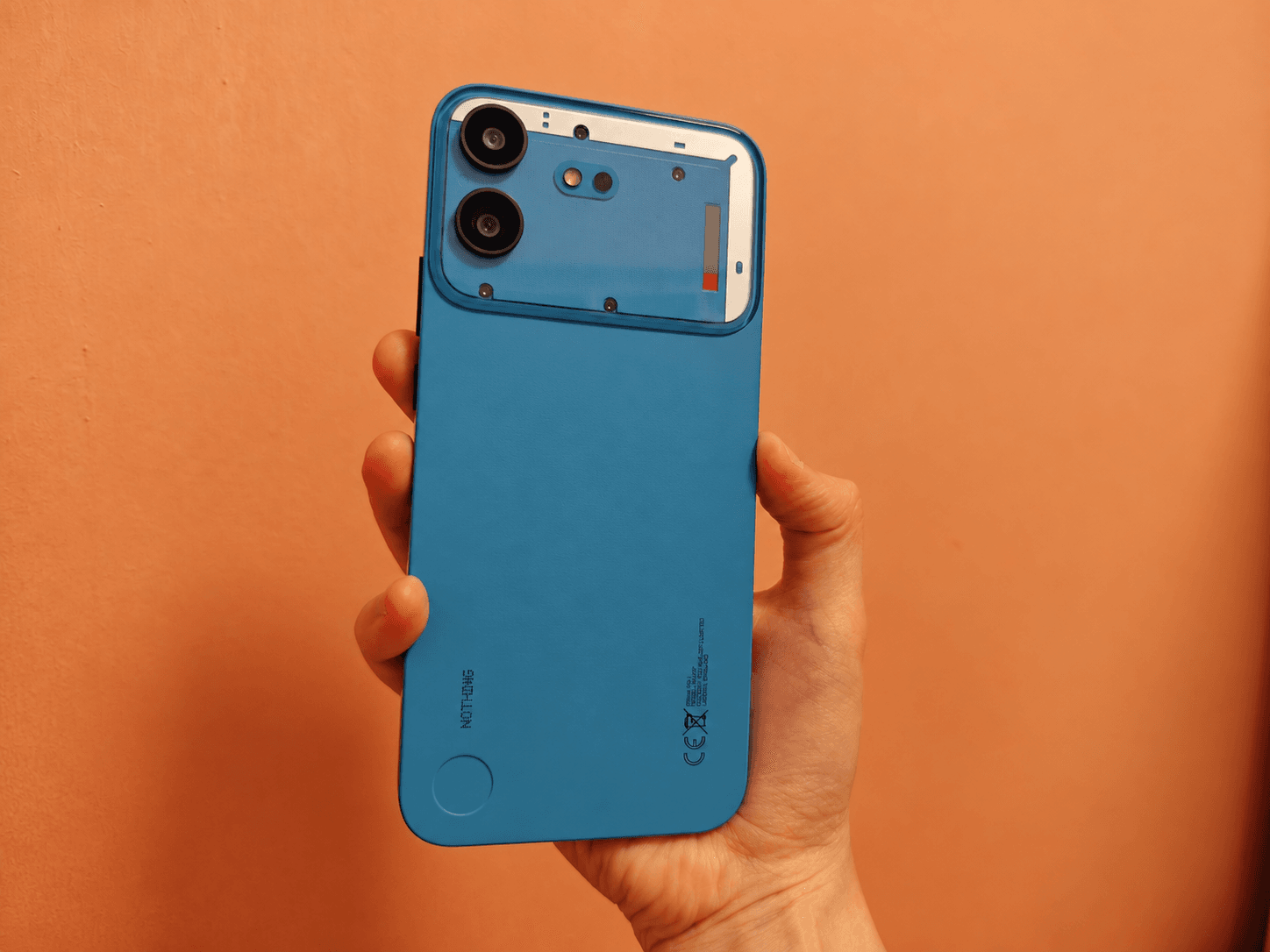
The Nothing Phone (4b) brings the brand’s distinctive design and clean software experience to a more affordable price point. After spending time with the Blue 8GB/128GB model, I fo...
There's a certain kind of storage device that lives at the bottom of a backpack, gets plugged into three different laptops before lunch, and never asks for a cable, an app, or a se...
I’ve been using the Redmi Note 15 Pro as my daily phone for a bit, and here’s the vibe: it’s built like it’s ready for a bad day (or a clumsy owner), it lasts forever on a charge,...


 Today, AMD has just released their latest Ryzen 8000G Series Processors, which showcases their latest technologies into a single desktop processor. With the latest "Zen 4" microarchitecture, AMD has improved its design which allowed improved IPC (instructions per clock) and higher core frequencies. Furthermore, it also features the AMD Radeon 700M graphics compute units, which leverages on the RDNA 3 graphics technology, to provide improved graphics compute and gaming capabilities. It even features dedicated AI Engine for accelerated AI inference compute capabilities. What's interesting is that AMD has migrated the Ryzen 8000G series processors' Zen 4 CCDs from 5nm node to the 4nm node, promising even more efficiency.
Certainly, the AMD Ryzen 8000G Series sits at the top of consumer desktop heterogenous computing. With the release, AMD has introduced 4 new products as part of the series.
Today, AMD has just released their latest Ryzen 8000G Series Processors, which showcases their latest technologies into a single desktop processor. With the latest "Zen 4" microarchitecture, AMD has improved its design which allowed improved IPC (instructions per clock) and higher core frequencies. Furthermore, it also features the AMD Radeon 700M graphics compute units, which leverages on the RDNA 3 graphics technology, to provide improved graphics compute and gaming capabilities. It even features dedicated AI Engine for accelerated AI inference compute capabilities. What's interesting is that AMD has migrated the Ryzen 8000G series processors' Zen 4 CCDs from 5nm node to the 4nm node, promising even more efficiency.
Certainly, the AMD Ryzen 8000G Series sits at the top of consumer desktop heterogenous computing. With the release, AMD has introduced 4 new products as part of the series.