NVIDIA’s RTX Spark platform is moving beyond laptops into compact Windows desktops from ASUS, Dell and MSI, while a separate four-node DGX Spark developer kit targets researchers who want to prepare multi-system workloads at their desks.
The two announcements address different ends of local accelerated computing. RTX Spark desktops are intended for AI agents, model fine-tuning and creative applications on a dedicated PC. The DGX Spark HPC Developer Kit links four Linux-based DGX Spark systems for scientific software development and distributed AI work.
ASUS, Dell and MSI systems are available now, according to NVIDIA. Models from Acer, GIGABYTE and HP are due later, alongside Microsoft’s Surface RTX Spark Dev Box. NVIDIA has not provided one global price list, and configurations and availability may vary by manufacturer and market.
RTX Spark puts up to 128GB of unified memory in a compact PC
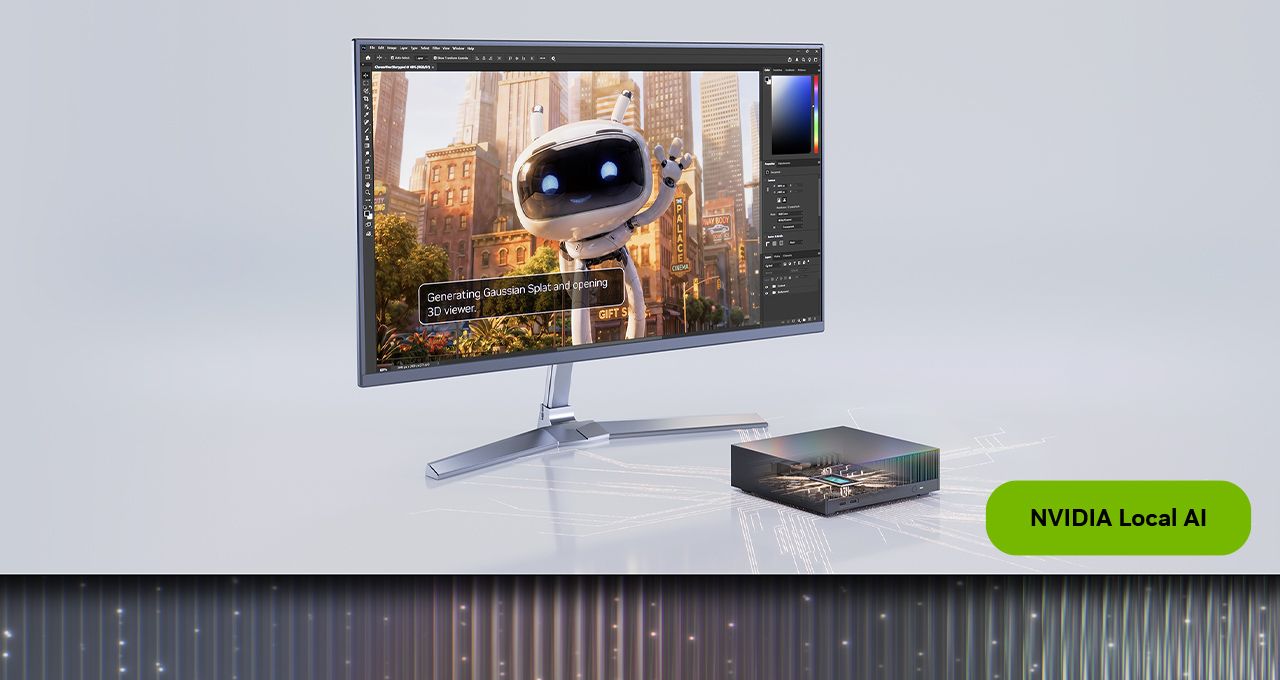
NVIDIA says RTX Spark compact desktops combine a 20-core Grace CPU with a Blackwell RTX GPU containing 6,144 CUDA cores. Systems can be configured with up to 128GB of unified memory and are rated for up to one petaflop of AI performance.
The unified-memory design is the platform’s central advantage for local AI: the CPU and GPU can work from a large common pool rather than limiting a workload to conventional discrete graphics memory. NVIDIA says that capacity is sufficient for supported language models with as many as 120 billion parameters, 3D scenes exceeding 90GB and real-time 4:2:2 video editing. Those are vendor capability claims rather than results independently tested by TTR.
Ten-gigabit Ethernet is included for moving model files, datasets and media to networked storage. NVIDIA positions a dedicated compact desktop as a machine that can keep local agents, scheduled tasks or long renders running while a user’s primary laptop is elsewhere.
Local processing can keep selected code and files on the PC and avoid per-token cloud API charges, but it does not make every workflow fully offline. Software licensing, cloud-routed agent tasks, model downloads and application-specific services may still require network access.
ASUS, Dell and MSI lead the first desktop wave
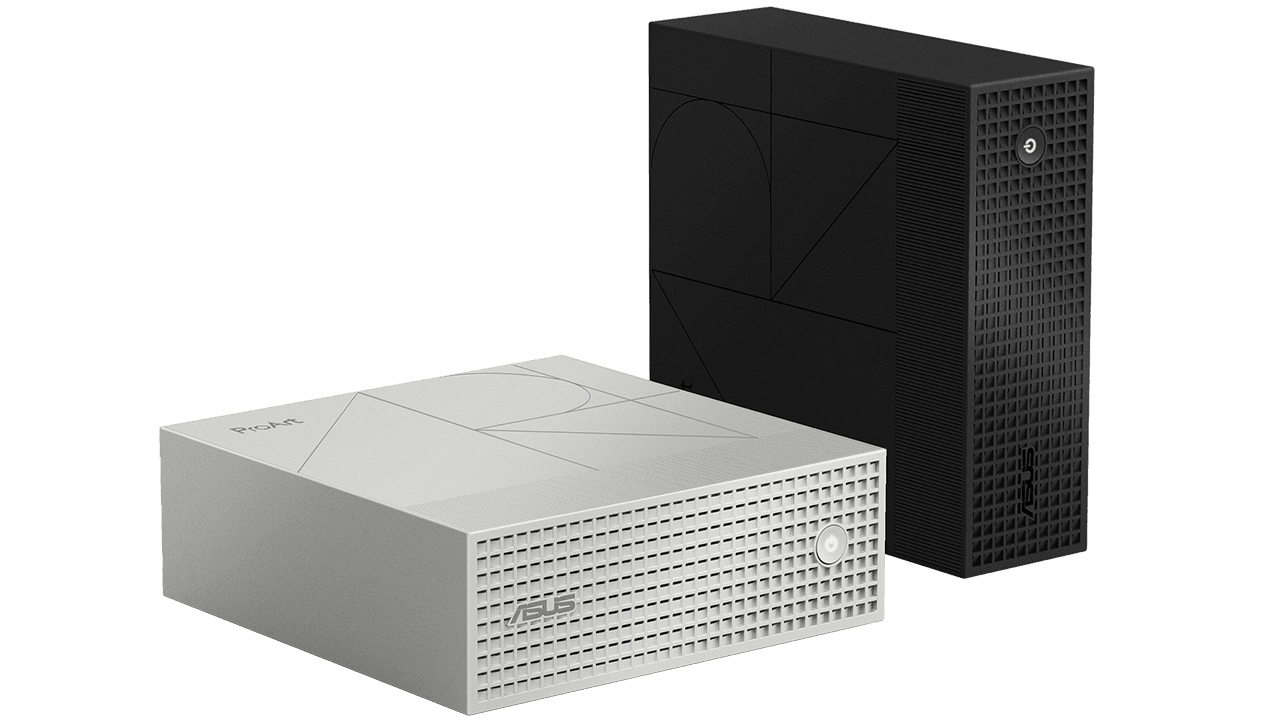
The first systems include the ASUS ProArt GR1X and MSI EdgeMesa N AI+ Series, with Dell also shipping an RTX Spark compact desktop. NVIDIA says Acer, GIGABYTE, HP and Microsoft devices are on the way, expanding the platform beyond the initial three vendors.

Buyers will need to compare each vendor’s memory, storage, ports, cooling, support and regional pricing rather than treating RTX Spark as a single fixed PC specification. NVIDIA’s announcement establishes the common compute platform but does not provide a like-for-like performance comparison among the shipping systems.
Windows on Arm software support is expanding
NVIDIA is pairing the hardware launch with broader native Windows on Arm support. Developers can use CUDA and Linux tools through Windows Subsystem for Linux, while NVIDIA points to Hermes Agent and NemoClaw blueprints for agent workflows and Unsloth for fine-tuning supported models.
NVIDIA Switchyard, available through Hermes, can route tasks between local and cloud models. That offers flexibility for workloads too large or demanding for the desktop, although it also means “local AI” agents may still use cloud services depending on their configuration.
Adobe is extending native and RTX-accelerated support across its applications. NVIDIA says Premiere accelerates features including Enhance Speech, Object Mask, Scene Edit Detection and Auto Reframe through TensorRT-RTX. Photoshop adds TensorRT-RTX acceleration for the Remove Tool and native Camera Raw support, while Illustrator and InDesign have native Windows on Arm versions. Substance 3D Painter 12.2 adds native Arm support in public beta.
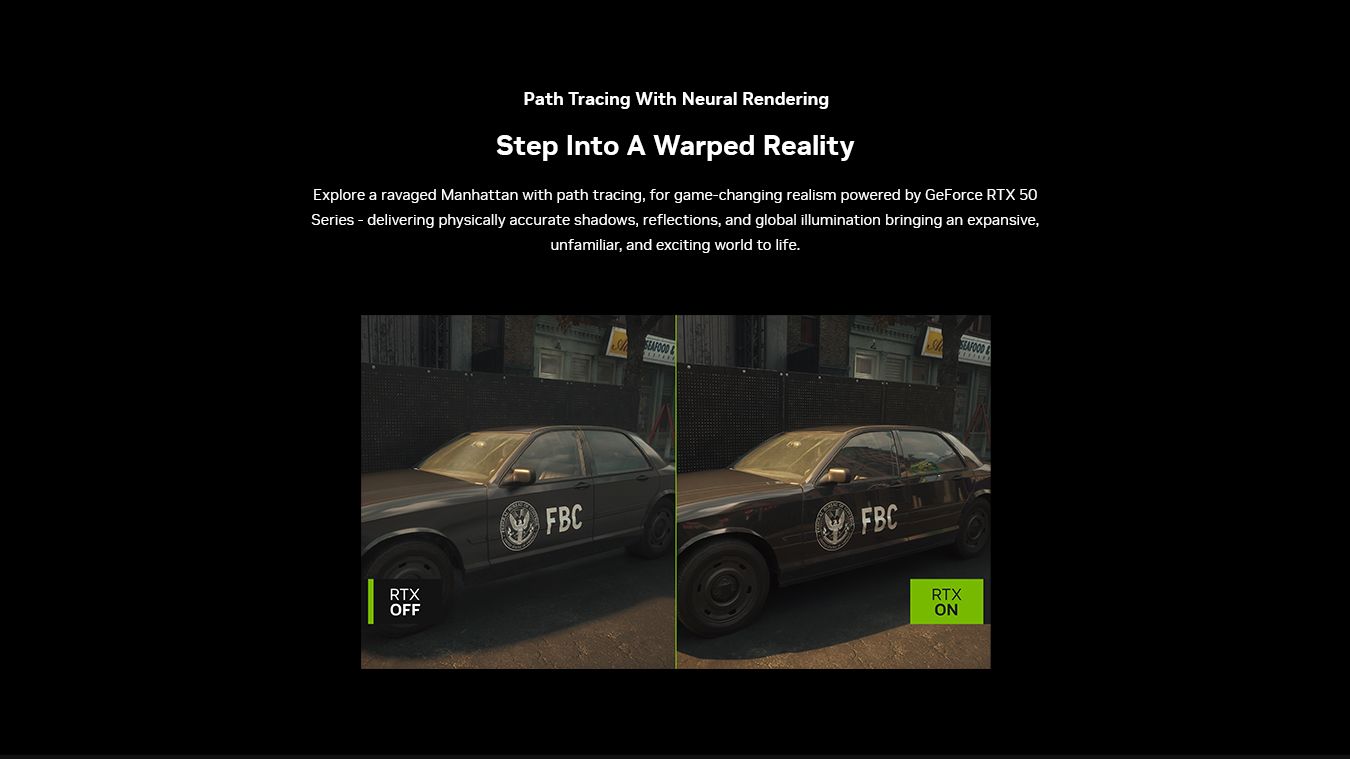
Blender 5.3 also integrates DLSS 4.5 Ray Reconstruction into the Cycles viewport for cleaner interactive ray-traced previews. The feature requires Blender 5.3 and a current NVIDIA Game Ready or Studio driver.
Four DGX Spark nodes form a desktop development cluster
At SC26 in Chicago, NVIDIA introduced the DGX Spark HPC Developer Kit, which connects up to four DGX Spark systems in a ring. Each node links directly to its two neighbours through ConnectX-7 networking, removing the need for a separate network switch in the reference setup.
A four-node configuration provides 512GB of combined memory and 16TB of NVMe storage. NVIDIA says researchers can distribute AI models with as many as 700 billion parameters across the cluster when using NVFP4 precision. The 16TB figure comes from NVIDIA’s official SC26 announcement and supersedes the 20TB figure stated in the supplied media email.
The kit is intended as a development and debugging environment before workloads move to larger shared systems. NVIDIA demonstrated multi-node workloads including LAMMPS with Kokkos for materials simulation and NAMD for molecular dynamics, while the broader DGX Spark community has validated software including GROMACS, OpenFOAM and WRF.
NVIDIA’s HPC SDK installation playbook is still described as coming soon. Once available, it is expected to cover GPU-accelerated C, C++ and Fortran compilers, libraries and message-passing tools for the cluster. The developer kit is on display at SC26 and available for sale through NVIDIA and participating partners, but pricing and local availability were not included in the announcement.
Two approaches to bringing accelerated work closer to users
RTX Spark desktops and the DGX Spark cluster share Grace Blackwell technology, but they are not interchangeable products. RTX Spark focuses on a Windows PC experience for creators, developers and always-on local agents. DGX Spark targets Linux-based AI and scientific development, with the new kit adding a repeatable four-node topology.
For prospective buyers, the unresolved questions are practical: final regional pricing, exact OEM configurations, application compatibility, measured performance and how often a workload still needs cloud or data-centre resources. NVIDIA’s announcements expand the hardware and software choices, but independent testing will be needed to establish performance across real projects.
Sources: NVIDIA, “RTX Spark Compact Desktops Out Now”, 18 November 2026; and NVIDIA, “DGX Spark Developer Kit Turns a Desk Into a Supercomputing Lab”, 16 November 2026. Specifications, performance figures, model capacities and software claims are attributed to NVIDIA and have not been independently tested by TTR.