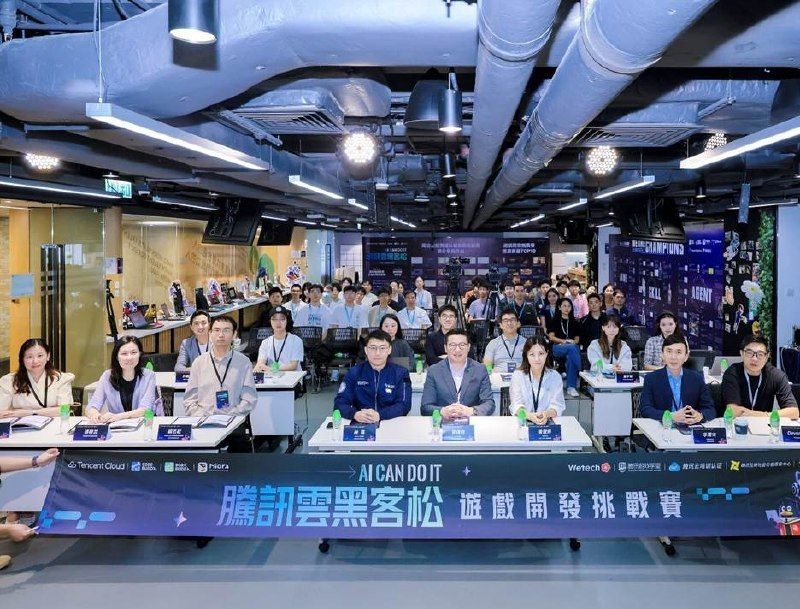
The Tech Revolutionist was at Taipei's 5th Smart City Summit & Expo to discover the latest smart city technologies solutions from around the world. An opportunity was also available to interview the deputy mayor of Taipei City, Chin-rong, LIN to find out on the strategies of how Taipei aims to become the leader in Smart City implementations.
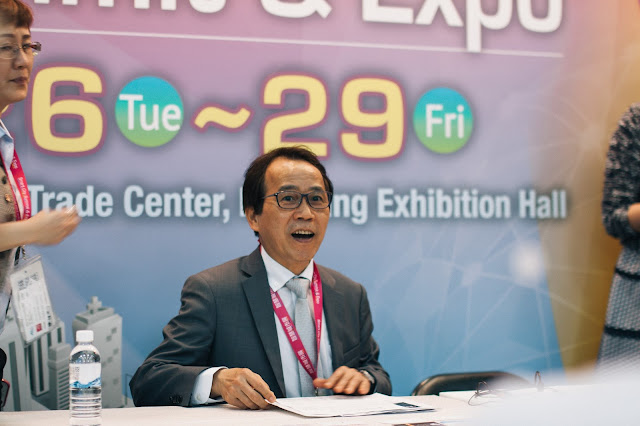
The deputy mayor listed 4 conclusions that leaders would need to heed to ensure a smooth
transition into a Smart City namely:
- Leaders need to be aware of the importance Mr. Lin said that leaders should not pursue a smart city for its own sake but acknowledge that it improves a city by leaps and bounds and it’s only a matter of time before they’ll need to begin to move into the future.
- Platforms for collaboration are important He referenced the Smart City Expo that was held as he was speaking as a good example of a platform that would enable deeper collaboration between countries to move ahead together. He also stressed that there should be more of such platforms and dialogues to further the cause.
- Evaluation systems need to be put in place Mr. Lin said that we needed to find ways to measure the success of a Smart City to always know where we’re heading and whether we’re taking the right steps. This ensures that all innovations lead towards better lives as an end goal.
- Test-beds help to validate ideas Using Taipei as a prime example, he encourages nations to work together to experiment with new solutions and to see what works best. Using test beds in different countries with similar demographics will allow faster implementation and sharing knowledge is key to this.
Mr Lin
also shared about the new GOSMART initiative where 27 city delegates had signed
an MOU to signify their support of these countries working together towards
building better smart cities.
Of
the questions, he was asked about what the list of priorities of Smart City
initiatives would be. To which his answer was that every city would face
differing issues and therefore have differing priorities.
He
shared that Taipei in particular, faced a slow-burning problem of an aging
population (much like in Singapore) to the extent that they
might see less than 5 kids per classroom.
Taipei’s measures to move towards a Smart City which included:
- A focus on public housing
- Strengthening quality and reliability of transport
- Making healthcare more efficient
- Embracing E-Payments
He
also stressed that Smart City initiatives not only enhances the quality of life
for citizens, but also helped to fuel the ‘new economy’ which Mr. Lin said to be
a ‘disruptive force’. But it would only be possible if the government, institutions and citizens work together to support each other.
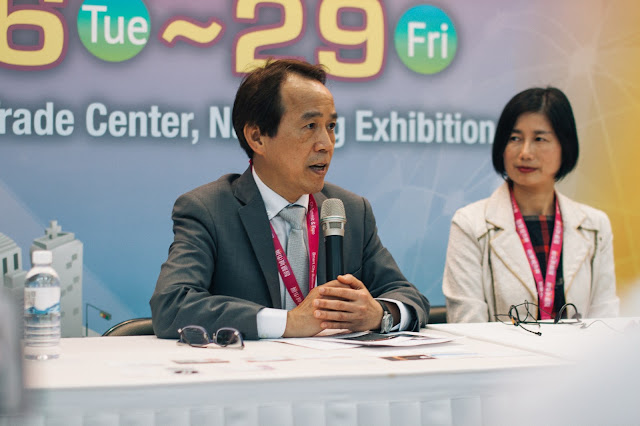
“I
believe that Smart Cities are meant to help us ‘Do More, With Less’ – that is
my philosophy” – Deputy Mayor
When
asked how dialogues can remain collaborative and inclusive, Mr. Lin responded
by saying that they intend to continue holding such events to foster such a
spirit. Additionally, delegates are to be re-invited from cities to continue implementation
of test-beds as this aligns with Taipei’s vision to eventually become a hub for
smart-city solutions.
“Smart
cities can’t be copied. What works for one city, might not work for another.”
For the LATEST tech updates,
FOLLOW us on our Twitter
LIKE us on our FaceBook
SUBSCRIBE to us on our YouTube Channel!