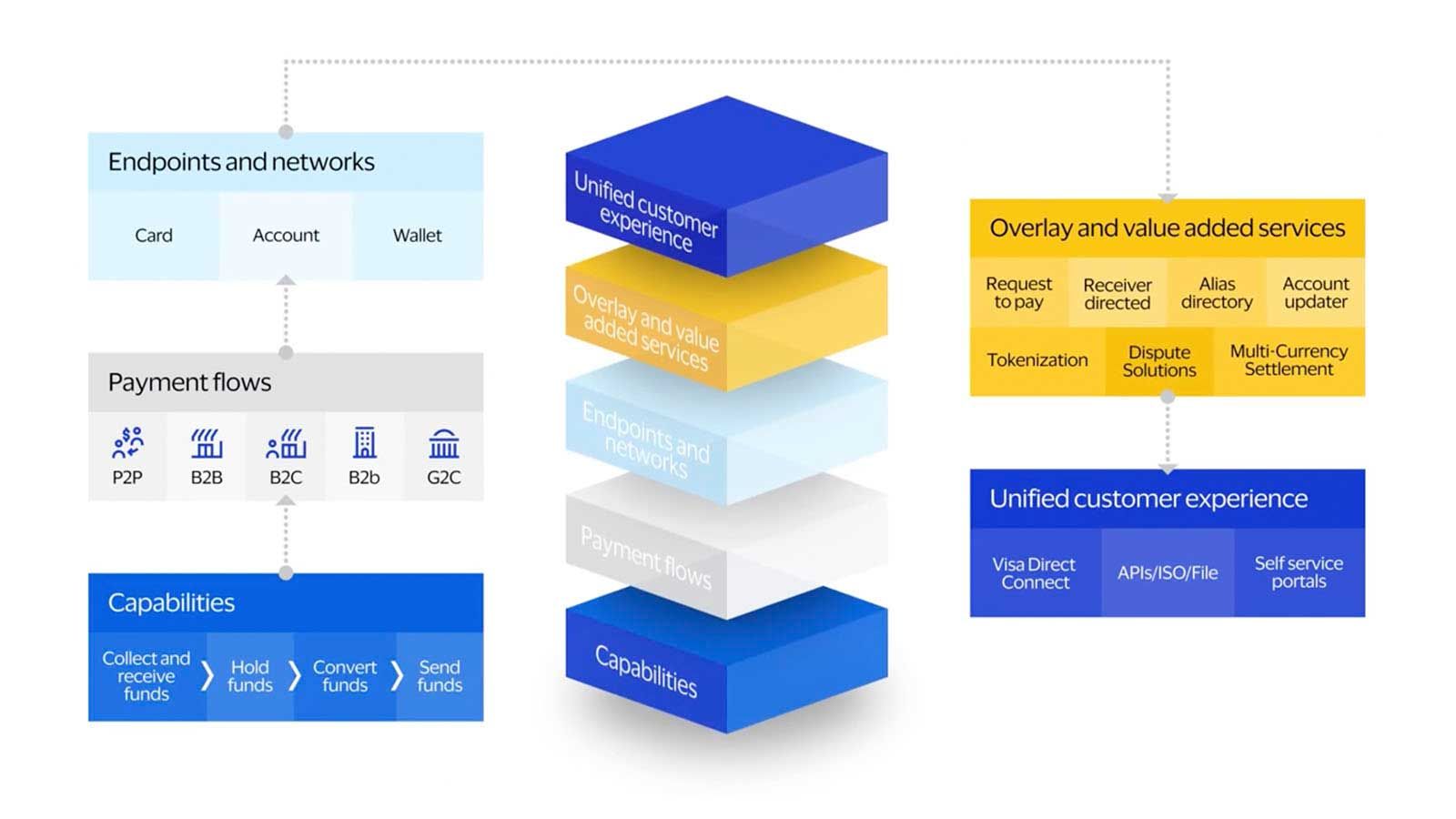
Visa is using Singapore FinTech Festival 2026 to bring several of its emerging commerce initiatives into one public showcase, spanning AI agents, digital money, cross-border wallets and cyber-fraud intelligence.
The Visa Commerce Arena is organised around three themes—Smart Commerce, New Flows of Value and Trust at Scale—with demonstrations intended to show how experimental technology could become practical payment and commerce experiences.
The event presentation brings together the four major announcements covered separately by The Tech Revolutionist: Agentic Ready acceptance testing, Visa Direct stablecoin prefunding, Visa Scan to Pay with Alipay+, and the Visa Threat Intelligence Platform.
Smart Commerce puts AI agents into payment journeys
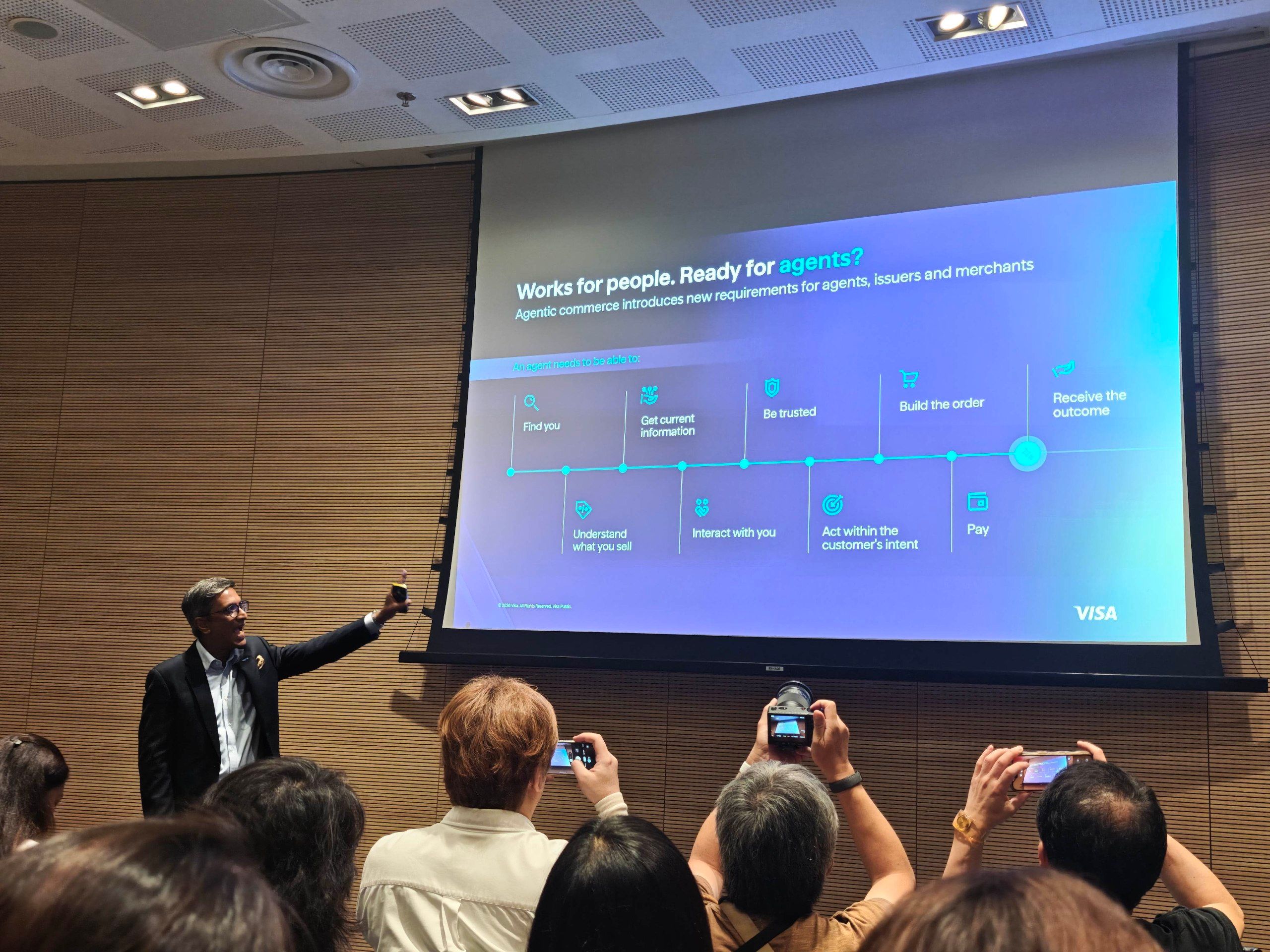
The Smart Commerce area demonstrates AI moving from answering questions to taking actions. Visa describes agent-to-agent interactions and live agentic-commerce experiences in which consumers or businesses could discover products, assemble purchases and pay while retaining permissions and control.
The showcase also includes Visa’s Universal Financial Account concept, which is intended to orchestrate multiple capabilities through a common layer. The release does not present this concept as a generally available consumer account or provide a production-launch schedule.
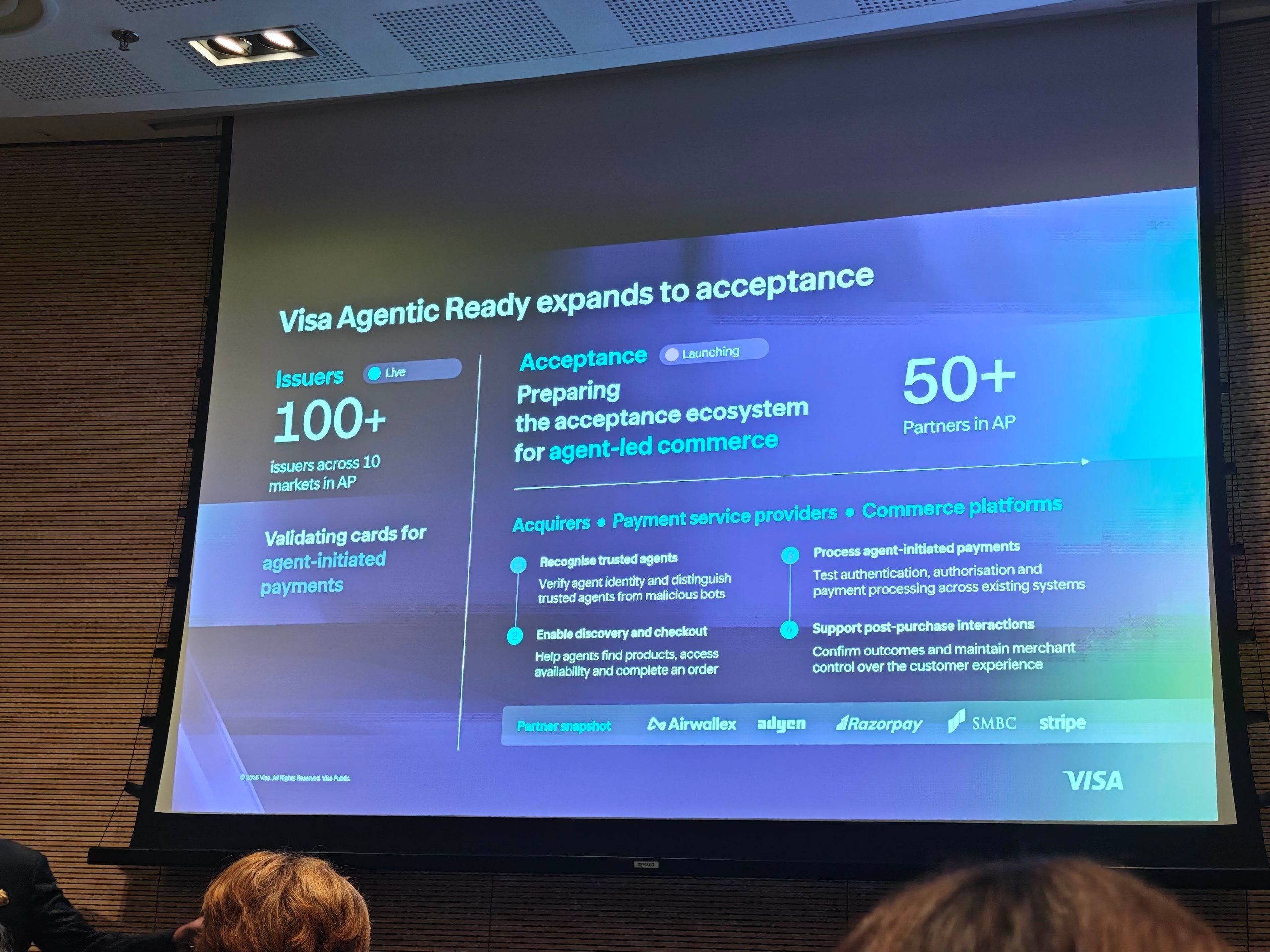
Alongside the demonstrations, Visa is expanding its Agentic Ready programme to acceptance testing with more than 50 acquirers, payment providers, gateways, banks and selected merchants. It is also working with Lianlian DigiTech on trusted business-to-business agentic-commerce scenarios for small and medium-sized businesses.
Visa cites research showing that generative-AI use is already high in Singapore, Australia and Japan, but trust in autonomous purchasing is substantially lower. The company says generative-AI usage ranges from 67% in Japan to 90% in Singapore, while only 20% to 30% of surveyed consumers would trust AI to buy regularly purchased household items. The supplied release does not include the full research methodology.
New Flows of Value covers stablecoins, QR and acceptance
The second zone focuses on digital and interoperable money movement. Demonstrations include the Visa Stablecoin Platform, stablecoin-enabled payouts and settlement, cross-border money movement, commercial and agentic procurement, Visa Pay-enabled payments and Visa Accept for creators and micro-merchants.
Two regional announcements provide the clearest near-term examples. Visa Direct plans to let eligible clients use supported stablecoins to prefund cross-border fiat payouts, with dtcpay piloting the capability in Singapore. Separately, Visa and Ant International are connecting eligible Visa cards in participating wallets to Alipay+ merchant QR codes across selected Asia-Pacific travel corridors.
These initiatives do not make every stablecoin, wallet, card, merchant or market immediately compatible. Client eligibility, wallet support, supported corridors, digital-asset partners and rollout timing remain specific to each programme.
Trust at Scale connects cyber signals with fraud risk
The Trust at Scale area turns payment security into an interactive demonstration through Visa Protect and fraud-focused exhibits. The central message is that new ways to shop and move money need corresponding advances in identity, authorisation and threat detection.
Visa is also launching its Threat Intelligence Platform in Asia Pacific. VTIP combines cyber, vulnerability, brand, digital-identity and compromised-payment intelligence for financial institutions, with the aim of identifying threats before they become transaction fraud.
A Visa-commissioned Forrester Consulting study found that 60% of surveyed regional financial-institution leaders reported more sophisticated fraud and 57% reported faster fraud during the previous 12 months. The findings reflect surveyed respondents and may not represent every institution or market.
Singapore is becoming a larger Visa technology hub
The SFF presentation follows Visa’s establishment of six global capability hubs at its new Solution Center in Singapore. The hubs cover areas including AI, digital money, cybersecurity, quantum computing and next-generation payments.
Visa says the Paya Lebar Green centre brings together more than 1,500 professionals, making Singapore one of its largest technology and innovation hubs. The company positions the centre as a place to develop technologies intended for eventual deployment across its global network.
The release does not detail staffing by capability, project timelines or which demonstrations have reached production. The distinction between a festival exhibit, a pilot and a commercially available service remains important.
Where to see the showcase
Visa’s Commerce Arena is at Hall 2, booth 2B25, during Singapore FinTech Festival from 18 to 20 November 2026. Demonstrations at the booth are event experiences; availability of the underlying products and services varies by programme, participant, market and regulatory approval.
Source: Visa, “Visa Brings the Future of Commerce to Life at Singapore FinTech Festival 2026”, issued in Singapore on 18 November 2026. Demonstrations, programme scale and research figures are attributed to Visa and its cited research; The Tech Revolutionist has not independently tested the showcased services.