
Meta has expanded its smart-glasses range in Singapore with three collections available now: Meta Glasses from S$349, Meta Glasses by LISA from S$559 and Ray-Ban Meta (Gen 3) from S$669.
The launches follow Meta Connect 2026 and broaden the company’s wearable line beyond a single partner or frame style. Meta also previewed its Muse personal AI agent, audio-focused Ray-Ban glasses and a roughly 100-gram VR system, although those products do not yet have complete Singapore launch details.
Singapore pricing and availability
| Product | Singapore availability | Starting price |
|---|---|---|
| Meta Glasses | Available now | S$349 |
| Meta Glasses by LISA | Available now | S$559 |
| Ray-Ban Meta (Gen 3) | Available now | S$669 |
| Ray-Ban Meta Audio | Coming soon; date not announced | To be announced |
| Meta VR Glasses | Spring 2027 | To be announced |
Meta Glasses add Capri, Nova and a LISA collection
The expanded Meta Glasses collection adds Capri and Nova styles alongside more frame, lens and case combinations. Meta says its Singapore range starts at S$349.
A separate LISA collaboration comprises the Meta Adventurer LISA Edition and Meta Capri LISA Edition. The frames and case use custom star details, while the package includes case charms inspired by LISA’s pets and digital photocards unlocked through the glasses. Prices start at S$559.
These are fashion-led variations of Meta’s camera-and-audio glasses rather than display glasses: the announcement does not describe an in-lens screen for either collection.
Ray-Ban Meta Gen 3 gets longer battery life and six microphones
Ray-Ban Meta (Gen 3) is offered in Wayfarer, Aviator and Zena styles from S$669. Meta claims up to nine hours of battery life, one hour more than the previous generation, alongside a slimmer design and adjustable temple tips.
A new six-microphone array is intended to improve calls and voice commands in noisy or windy environments. Meta says it can reduce more than 90% of background noise, but TTR has not independently tested that claim. The glasses also add a customisable action button, a 12-megapixel camera and 3K video recording.
As with earlier models, an external LED is designed to indicate when the camera is capturing photos or video. Buyers should still consider local privacy expectations and obtain consent where appropriate when recording other people.
Muse will bring longer-running tasks to existing glasses
Meta says it is working to bring Muse to existing AI glasses. The personal agent is intended to handle multi-step tasks such as planning workouts, logging meals, checking flight prices, booking appointments and identifying products seen by the wearer.
Unlike a single voice query, Muse can continue a task in the background and report back when it is complete. Meta has not provided a Singapore rollout date, a definitive compatibility list or detailed information about which services will support transactions at launch. Availability and results are also likely to depend on accounts, connected services and regional support.
Audio glasses and a 100g VR system are coming later
Ray-Ban Meta Audio removes the camera and concentrates on open-ear listening, calls and AI assistance. Meta describes the 43-gram design as its lightest and slimmest AI glasses so far, with up to 12 hours of use per charge and up to another 48 hours from the charging case. Clubmaster and Burbank styles are planned, but Singapore pricing and timing remain unannounced.
The more ambitious Meta VR Glasses are scheduled for spring 2027. Meta says the glasses weigh about 100 grams because processing, battery and storage are moved to a tethered puck that clips to a pocket or bag.
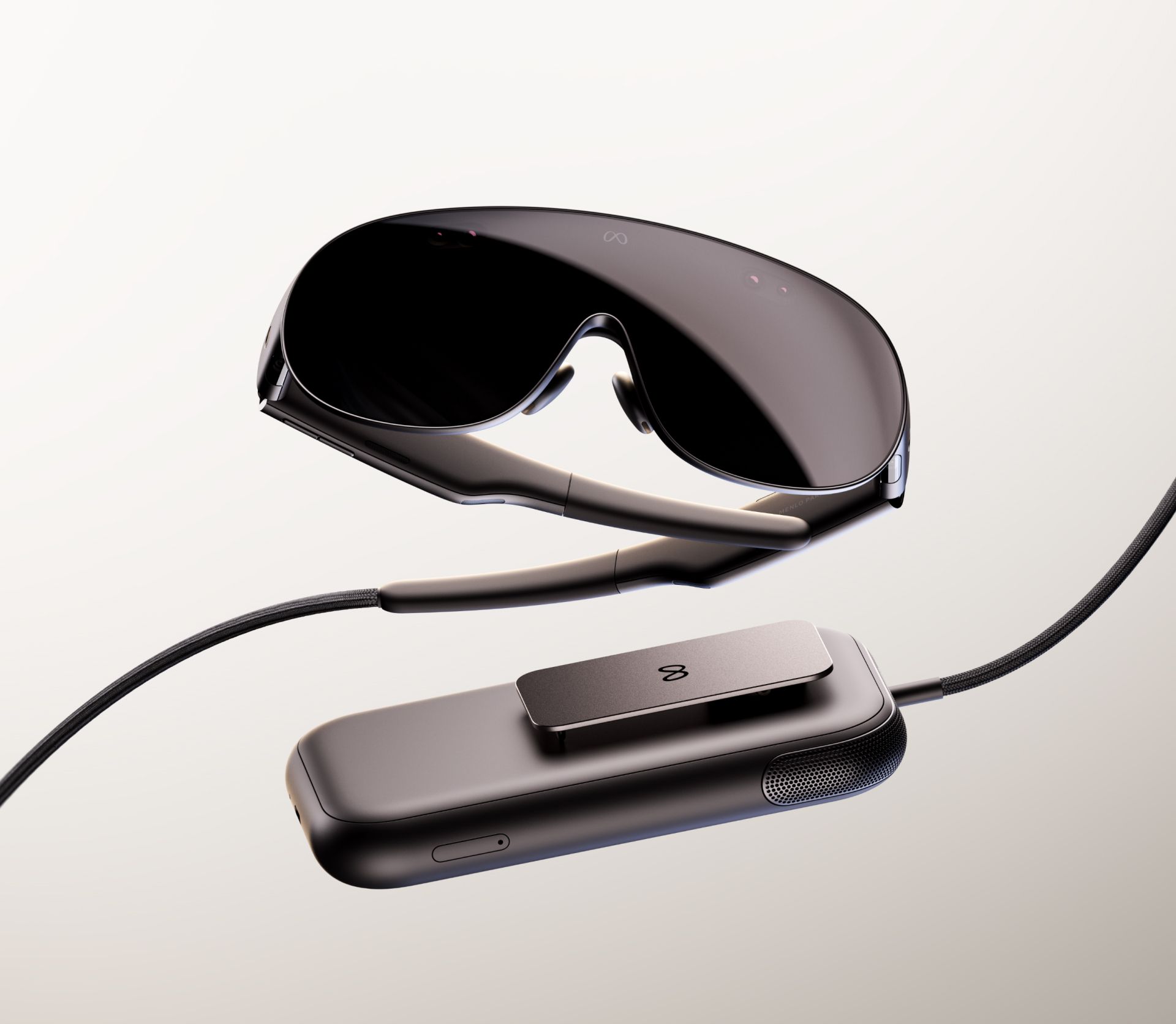
The headset uses micro-OLED panels in what Meta calls a 5K Infinite Display, with 37 pixels per degree, Dolby Vision and Dolby Atmos. It is powered by Qualcomm’s Snapdragon Reality Elite processor, while the external puck is rated for up to three hours of high-resolution media playback and supports 45W charging.
Meta is positioning the system for immersive video, a multi-screen private workspace, hand-tracked gaming and hologram calls. More than 75 hand-controlled games are promised for launch, and a spring 2027 Beat Saber update is set to add the controller-free Flux mode. Singapore pricing has not been announced.
What remains to be tested
The announced range spans several distinct ideas: conventional-looking camera glasses, an audio-only design and substantially more capable VR hardware. The practical differences will depend on comfort over long sessions, microphone and speaker quality, battery life in mixed use, camera performance, prescription options and the availability of Meta AI services in Singapore.
TTR has not tested any of the newly announced products. Battery life, noise reduction, comfort and display-quality statements in this article are manufacturer claims and may vary with configuration and use.
Further details are available in Meta’s official announcements for its AI-glasses range and Meta VR Glasses.
Source: Meta announcements dated 23 September 2026 and Singapore launch information distributed by Eastwest PR. Product specifications and performance statements are attributed to Meta and have not been independently verified by TTR.